
Why Do I Keep Waking Up at 3 AM?
TL;DR
Waking briefly around 3 a.m. is common. The problem begins when a normal awakening turns into a prolonged period of alertness. For many people, this is connected to a weakened contrast between daytime cortisol and nighttime melatonin. Bright morning light, movement, and consistent wake times help support a strong daytime cortisol rhythm, while dim evenings, earlier meals, and lower stimulation allow cortisol to decline and melatonin to rise. When these signals are poorly timed, you may still fall asleep initially but become more alert after waking later in the night. A cool, completely dark, quiet bedroom and removing the clock from sight can also make it much easier to return to sleep before stress and cortisol take over.
Why does it always seem to happen around 3 a.m.?
Many people describe the same frustrating pattern.
They fall asleep normally, wake sometime around 2, 3, or 4 a.m., and suddenly feel much more awake than they should. Their mind begins working, they check the time, and the rest of the night becomes a calculation:
If I fall asleep right now, I can still get three more hours.
The clock moves forward, the pressure builds, and sleep becomes increasingly difficult.
There is nothing biologically magical about 3 a.m. The exact time depends on your bedtime, circadian rhythm, sleep pressure, environment, and the cause of the awakening. It simply falls within a common part of the night when sleep may be easier to interrupt.
Brief awakenings are normal
Most people wake several times during the night. These awakenings often happen around transitions between sleep cycles and may be so brief that no memory of them forms. Research suggests that healthy adults can awaken approximately five times per night without remembering most of those transitions the following morning.
The main concern is how long you remain awake and how difficult it becomes to return to sleep.
One person may briefly adjust their position, pull up the blanket, and fall asleep again within seconds. Another person may notice a sound, see the clock, begin thinking about tomorrow, and remain awake for the next hour.
Both people woke up. Only one remembers it as a sleep problem.
Why does everyone give a different explanation?
Search for the cause of 3 a.m. awakenings and you will find dozens of confident answers.
A nutrition specialist may focus on your evening meal. A trainer may focus on exercise timing. A therapist may focus on stress. A sleep specialist may consider sleep apnea.
These explanations may all be valid for certain people. They do not necessarily apply to everyone.
Nighttime awakenings are complex. Population research has connected them with many physical, psychological, behavioural, and environmental factors. Even people experiencing the same pattern may have completely different underlying causes.
This is why it helps to look at the full 24-hour pattern instead of searching for one food, habit, or supplement to blame.
Where cortisol and melatonin fit
Cortisol and melatonin follow opposing daily rhythms.
Cortisol rises in the early morning and increases sharply after waking. This is known as the cortisol awakening response. It helps prepare your body for alertness and the demands of the day. Cortisol then gradually declines, reaching its lowest levels during the evening and early part of the night.
Melatonin follows a different pattern. It rises in response to darkness during the evening, supports the transition into biological night, remains elevated during sleep, and declines as morning approaches.
Healthy sleep depends partly on maintaining a strong contrast between these two hormones. Your body should receive clear signals that daytime is bright, active, and alert, while nighttime is dark, quiet, and restful.
When daytime signals are weak and evening signals remain strong, that contrast becomes less distinct. Your body may receive a weaker, shorter nighttime signal, and have difficulty falling back asleep after an otherwise normal awakening.
The morning influences the following night
Bright morning light is one of the strongest signals available to the circadian system. Light entering the eyes shortly after waking tells the brain that the active portion of the day has begun. Transitioning from dim to bright light in the morning can increase cortisol, suppress remaining melatonin, and improve alertness.
This does not mean that everyone waking at 3 a.m. has a cortisol deficiency in the morning. It means that low morning light, inconsistent wake times, limited daytime movement, and excessive indoor living may provide weaker signals than the circadian system needs, and may be a contributing factor to 3 a.m. awakenings.
Your body learns through contrast.
A bright, active morning supports alertness. A dim, calm evening supports sleep. When both ends of the day look similar, your internal rhythm receives less information about when each state should occur.
This is one reason morning light matters, even when the problem appears to happen in the middle of the night.
Evening cortisol and nighttime alertness
Cortisol is often called a stress hormone, although it has many necessary functions. Problems may occur when physical or psychological stimulation keeps the body activated late into the evening.
Insomnia is frequently associated with hyperarousal, a state in which the nervous system remains more alert than the situation requires. This can involve worry, mental activity, increased physiological activation, and changes in nighttime stress hormones.
If your evening cortisol is high and melatonin is suppressed, you may still produce enough sleepiness to fall asleep initially. As the night progresses and some of that sleep pressure has been released, the underlying alertness becomes easier to notice.
You wake briefly and your nervous system takes over.
What can keep your system activated at night?
The exact trigger varies, but several evening inputs spike cortisol and are worth examining.
Late screens and bright light
Evening light can suppress melatonin and shift circadian timing later. In controlled studies, using light-emitting devices before bed delayed melatonin timing, increased alertness, and made it harder to fall asleep compared with reading printed material.
The content matters too. Work emails, social media, intense shows, news, games, and arguments can all keep the brain engaged even when screen brightness is reduced.
Reducing screens during the hour before bed helps lower both the light signal and the mental stimulation attached to it.
Late vigorous exercise
Exercise generally improves sleep and should not be avoided. Research suggests that most healthy adults can tolerate exercise well, even later in the day, particularly when it ends several hours before bedtime.
However, very vigorous activity ending close to bedtime may disrupt sleep by keeping heart rate, body temperature, and nervous system activity elevated. This keeps cortisol elevated longer and later than is ideal.
A three-hour buffer is a useful experiment for anyone who regularly wakes feeling alert, hot, or physically activated. It does not need to become a rigid rule when evening exercise is otherwise supporting good sleep.
Late meals
Eating close to bedtime gives the body another task during a period intended for recovery. Digestion, body temperature, blood sugar, meal size, and the specific foods consumed can all affect the response.
Controlled research comparing dinner one hour before bed with dinner five hours before bed found changes in sleep-stage distribution and overall sleep quality.
Aim to finish substantial meals at least three hours before bed when possible. People who experience reflux, overheating, or digestive discomfort may benefit from an even larger gap.
Stressful or engaging stimulation
Work, planning, difficult conversations, financial concerns, and tomorrow’s unfinished tasks can all maintain a state of alertness.
The body does not need to distinguish between a physical emergency and a problem you are repeatedly reviewing in your head. Both can make returning to sleep more difficult.
Creating a predictable transition between the active day and the evening gives the nervous system time to settle before you enter bed.
How 3 a.m. waking becomes a learned pattern
Repeated awakenings can create stress around sleep itself.
After several difficult nights, you may begin going to bed wondering whether it will happen again. When you wake, your first thought may be:
Here we go again.
That thought increases frustration and alertness. Your heart rate may rise. Your mind begins calculating how much sleep remains. The bedroom gradually becomes associated with effort, monitoring, and worry.
This is one way an occasional awakening develops into a recurring pattern. Research on insomnia has found that clock monitoring is associated with greater worry and longer periods of wakefulness.
Your body learned this pattern over time. It will usually need time and repetition to learn a different one.
How to stop waking up at 3 a.m.
There is no single switch that immediately removes nighttime awakenings. The goal is to strengthen your daily rhythm and make each normal awakening less likely to become a fully alert state. Understanding your cortisol and melatonin rhythms, and placing the right activities at the right time can make a substantial positive impact over time.
Anchor your morning
Keep your wake time reasonably consistent, including weekends.
Get outdoor light as soon as practical after waking, ideally within the first hour. Pair it with a short walk or other light movement when possible.
Morning light should remain the priority even after a poor night. Sleeping several hours later and missing the morning light window may provide temporary relief while continuing the pattern into the following night.
Build a stronger daytime signal
Move regularly during the day and spend time outside beyond the initial morning exposure.
Eat meals at reasonably consistent times. Complete demanding work and vigorous exercise during the active portion of your day whenever your schedule allows.
Your circadian rhythm responds to the full collection of daily signals, not one isolated habit.
Create a defined evening transition
Reduce overhead lighting and screen brightness during the final hours before bed.
Finish substantial meals and vigorous exercise approximately three hours before sleep as a starting point. Shift work, planning, and emotionally activating activities earlier when possible.
Repeat a simple wind-down routine each evening. Reading, gentle stretching, conversation, light tidying, or a warm shower can all help create a reliable transition.
Make your bedroom easy to fall asleep in, twice
A good bedroom environment helps you fall asleep at bedtime. It also helps you fall asleep again after a normal nighttime awakening.
The room should be cool enough that you are not waking hot, sweating, or searching for a cooler part of the bed. Higher bedroom temperatures have been associated with lower sleep efficiency and poorer sleep quality.
It should also be quiet or protected from unpredictable changes in sound. Sudden environmental noise can disturb sleep even when you do not fully remember hearing it.
Finally, make the room dark.
Very dark.
Look for light around the curtains, under the door, on electronics, chargers, smoke detectors, humidifiers, and alarm clocks. Blackout window coverings or a comfortable eye mask can help when the room itself cannot be made completely dark. Aim for a room dark enough that even once your eyes have adjusted, you still cannot see your hand in front of your face.
A small amount of light may not wake you on its own. Once another normal awakening occurs, that light can make it easier to become aware of the room and remain awake.
It is very hard to stay awake for a prolonged time in a completely dark environment.
Remove the clock from sight
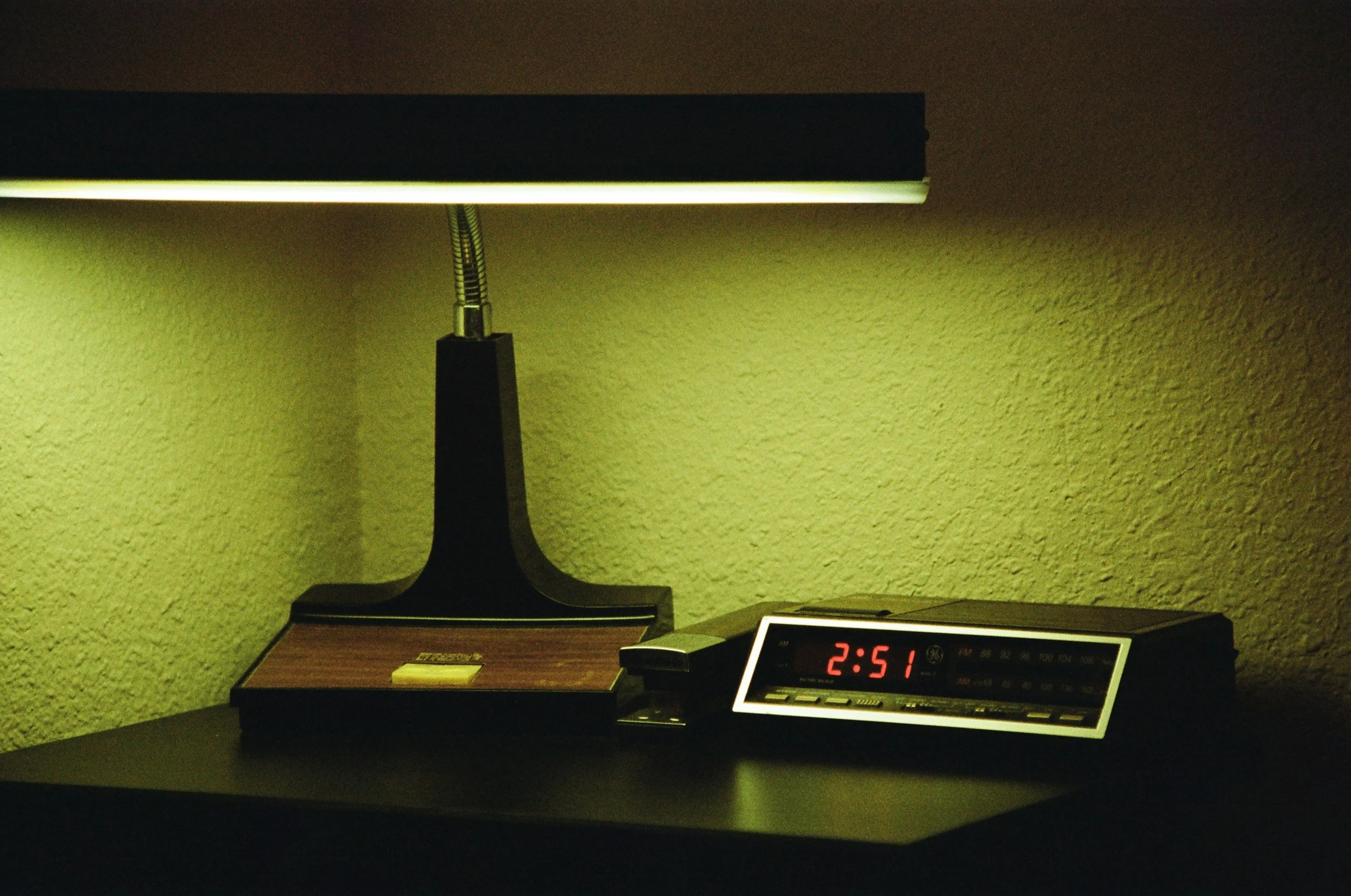
Get rid of your alarm clock, cover the display, or move your phone somewhere you cannot see it.
This may initially feel uncomfortable. Many people believe knowing the time gives them control.
In practice, it often begins a countdown:
I only have four hours left.
Now I only have three.
I have been awake for nearly an hour.
You do not need to know whether it is 1:47, 3:02, or 4:18. Your task remains the same: keep the environment dark, avoid stimulating input, and allow sleep to return without forcing it. Even on dim settings, alarm clocks generate enough light to make falling back asleep more difficult.
When the cause may be more than circadian timing
Circadian habits and the bedroom environment are powerful, but they cannot address every cause of repeated awakenings.
Sleep apnea, snoring, breathing restrictions, pain, reflux, hot flashes, medication effects, frequent urination, restless legs, anxiety, depression, and other medical factors can all contribute.
Consider speaking with a healthcare professional when awakenings happen most nights for several weeks, significantly affect daytime functioning, or occur alongside symptoms such as loud snoring, gasping, chest discomfort, severe reflux, persistent pain, or major changes in mood. Circadian health is a powerful tool, but is not a replacement for medical input.
Key takeaways
Brief awakenings during the night are normal. The problem is when your body shifts into full alertness.
A strong morning cortisol rise and a steady evening decline help support a healthy sleep-wake rhythm.
Melatonin should rise in the evening and remain elevated enough to support sleep through the night.
Morning light, daytime movement, and calmer evenings help strengthen the contrast between cortisol and melatonin.
A cool, completely dark, quiet bedroom makes it easier to fall back asleep before stress takes over.
