
Is Breakfast Really the Most Important Meal of the Day?
TL;DR
Breakfast is not automatically the most important meal because it happens in the morning. The first meal of your day matters because it provides your first major nutritional and metabolic signal. The specific timing of it is less important. The priority is building it around adequate protein, fibre, and minimally processed foods rather than beginning the eating day with sugar and refined carbohydrates alone.
Breakfast has been given too much power
For decades, breakfast has been described as the most important meal of the day.
That statement is too simple.
Eating a nutritious meal shortly after waking can be extremely helpful. It may support morning energy, reduce hunger later in the day, and make it easier to distribute protein and calories across your waking hours.
But breakfast does not automatically become healthy or important because it happens at 7:00 a.m.
A bowl of sugary cereal, a pastry, or a sweetened coffee may technically count as breakfast, but that does not make it a strong first meal. Meanwhile, someone who feels good throughout the morning and eats a balanced, protein-rich meal at noon may have a routine that works very well for them.
A better principle is this: Your first meal of the day is important. The exact time it happens is less important.
Breakfast is simply your first meal
The word breakfast means breaking the overnight fast.
For one person, that may happen shortly after waking. For another, it may happen several hours later. Not everyone needs to eat immediately after waking up. Sleep timing, work schedules, activity, appetite, family routines, and personal preferences all influence when eating feels natural and sustainable.
This does not mean timing is irrelevant. It means the whole pattern matters more than the breakfast label.
A first meal at noon followed by dinner at 6:00 p.m. creates a very different pattern from skipping food all day, becoming extremely hungry, and eating most of your calories late at night. Shifting the entire eating schedule later can produce less favourable glucose responses, even when the meals themselves remain the same.
The goal is not to eat as early as possible. It is to create a consistent eating pattern that supports your active day without pushing most of your food into the evening.
Your first meal sends an important signal
Food is one of the body’s major circadian timing signals.
When you eat your first meal, you are telling the digestive and metabolic systems that the feeding portion of the day has begun. The stomach, pancreas, liver, muscles, and other tissues begin responding to the incoming nutrients.
This signal does not replace morning light. Bright morning light remains the strongest input for anchoring the brain’s central circadian clock.
Food provides a different type of information. It helps organize rhythms related to digestion, blood-glucose regulation, appetite, and nutrient use.
Whether your first meal happens at 8:00 a.m. or noon, it is an opportunity to give the body a clear and useful daytime signal.
The composition of that signal matters.
Protein changes the quality of the first meal
Many common breakfasts are dominated by refined carbohydrates and sugar.
Cereal, toast with jam, muffins, pastries, juice, sweetened coffee, and flavoured breakfast bars are easy and familiar. But when eaten without meaningful protein or fibre, they can be digested quickly and create a larger rise in blood glucose.
That rise is followed by the work required to bring blood glucose back down. This pattern contributes to a later drop in energy, renewed hunger, cravings, or difficulty concentrating.
Adding substantial protein changes the meal.
Protein tends to increase fullness and provides amino acids needed to maintain and repair tissues throughout the body. Adding a minimum 30 grams of protein to breakfast leads to greater satiety compared with low-protein breakfast.
A protein-rich first meal also makes it easier to distribute protein across the day rather than trying to consume most of it at dinner.
This is especially relevant for people trying to maintain muscle, recover from exercise, manage body composition, or support healthy aging.
Carbohydrates are not the problem
The answer is not to remove carbohydrates from breakfast.
Carbohydrates provide useful energy, particularly for active people. Fruit, oats, potatoes, beans, whole grains, and quality breads can all fit comfortably into a strong first meal.
The issue is beginning the day with rapidly digested carbohydrates alone.
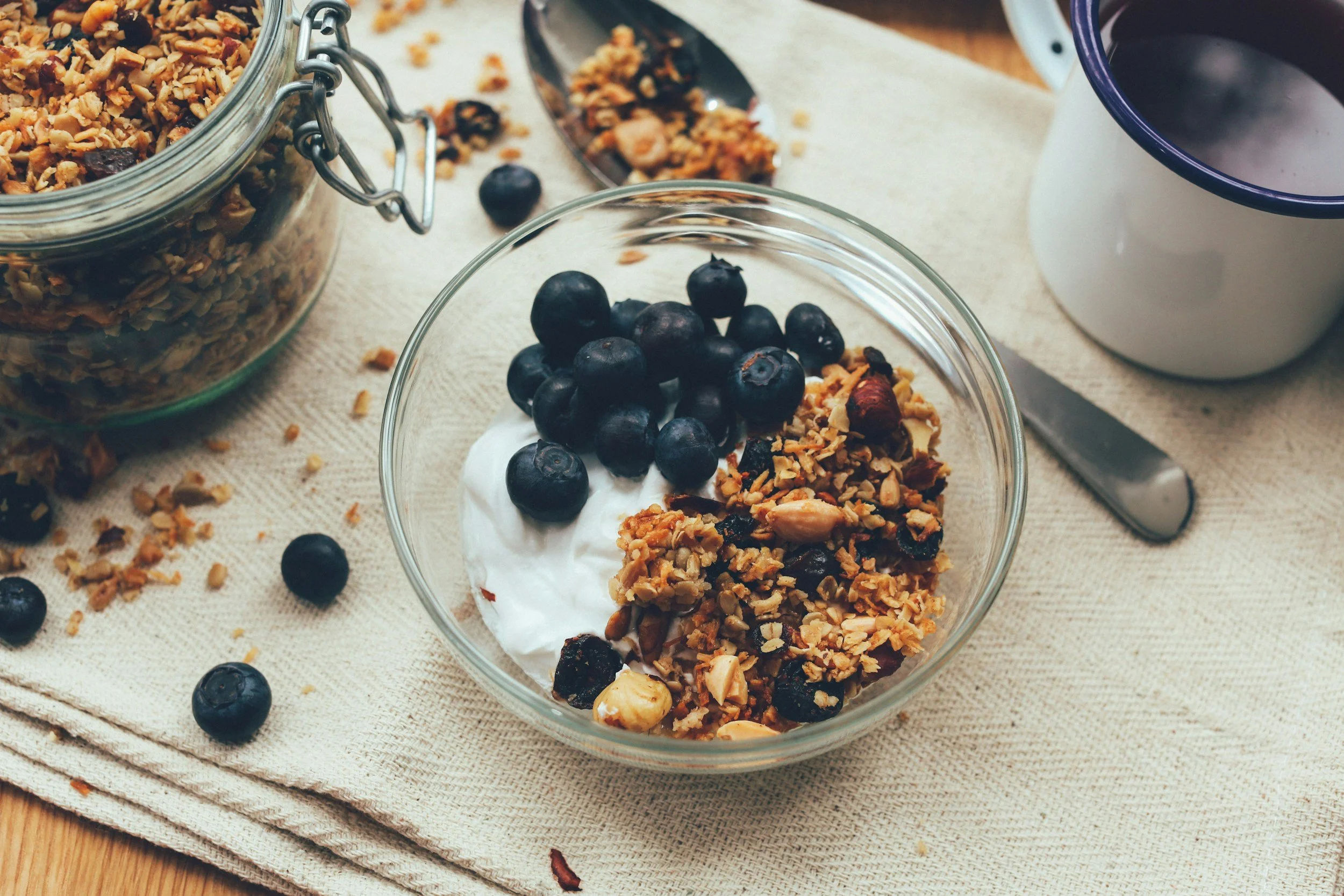
A bowl of oatmeal with Greek yogurt, seeds, and berries sends a different nutritional signal than instant flavoured oatmeal by itself. Toast with eggs and fruit is different from toast with jam and juice. A smoothie containing yogurt or protein powder, fruit, seeds, and oats is different from blended fruit and juice alone.
The goal is balance.
Protein should form the foundation. Fibre-rich carbohydrates, healthy fats, and minimally processed plants can then round out the meal.
What should your first meal include?
There is no single ideal breakfast.
The best first meal is one that provides enough nutrition, fits your schedule, and can be repeated consistently.
A strong first meal usually includes:
A meaningful serving of protein
A source of fibre
Minimally processed carbohydrates
Healthy fat
Enough total food to support your energy needs
That might look like eggs with vegetables, toast, and fruit.
It could be Greek yogurt with protein powder, berries, oats, nuts, and seeds.
It could be beans, chicken, tofu, or leftovers from dinner.
It could also be a full lunch eaten at noon.
Breakfast foods are largely a cultural category. Your body does not require cereal, toast, or orange juice simply because it is your first meal.
Eating at noon can be completely reasonable
Some people wake up hungry and feel much better after eating early.
Others naturally have little appetite in the morning. Forcing down a meal at 7:00 a.m. may not improve their energy, digestion, or relationship with food.
For a healthy adult who feels steady in the morning, meets their nutritional needs, and consistently eats a complete first meal around noon, that schedule can be reasonable.
The first meal still needs to do its job.
Coffee alone is not a balanced first meal. Neither is reaching noon extremely hungry and grabbing the quickest refined carbohydrate available.
A delayed first meal works best when it is intentional rather than accidental.
It should provide enough protein and overall nutrition, and it should leave sufficient time for the rest of the day’s food without pushing a large portion of eating close to bedtime.
Earlier may still be better for some people
Although eating immediately after waking is not universally necessary, an earlier first meal may be helpful when:
Morning hunger is strong
Energy or focus drops before noon
Morning exercise requires fuel or recovery nutrition
Delaying food leads to overeating later
It becomes difficult to consume enough protein and calories during the remaining eating window
The right schedule is the one that supports stable energy, adequate nutrition, consistent digestion, and a reasonable separation between the final meal and sleep.
The bigger picture
Breakfast is not magical.
Eating at 8:00 a.m. does not automatically improve health, and eating your first meal at noon does not automatically create a problem.
What matters most is what your first meal contains, how it affects the rest of your eating day, and whether the timing can be repeated consistently.
A protein-rich, fibre-rich first meal provides a strong foundation for energy, appetite, muscle maintenance, body composition, and blood-glucose regulation.
That meal might be breakfast.
It might be lunch.
Your body cares less about what you call it than what you put on the plate.
Key Takeaways
Your first meal matters more than the breakfast label.
Eating at noon can work well when the overall routine is balanced.
Build the first meal around a meaningful serving of protein.
Pair carbohydrates with protein, fibre, and healthy fats.
Choose a schedule that supports energy without pushing food late into the evening.
